

SPEAKING & WORKSHOPS
IDEAS THAT STAY WITH YOU AFTER THE ROOM EMPTIES
The most meaningful conversations don’t always give us answers. Sometimes, they give us something worth carrying with us.
Michelle Farkas draws from lived experience, more than three decades of professional leadership, and her work in wellness and behavior change to explore the stories we carry, the identities we build, the pressures of achievement and caregiving, and what it means to navigate change without losing sight of our own wellbeing.
Through story, perspective, and thoughtful questions, Michelle creates space for people to consider how those ideas show up in their own lives—and what they may want to carry forward differently.
MORE THAN A
MOMENT IN THE ROOM
A meaningful speaking experience doesn’t end when the presentation does
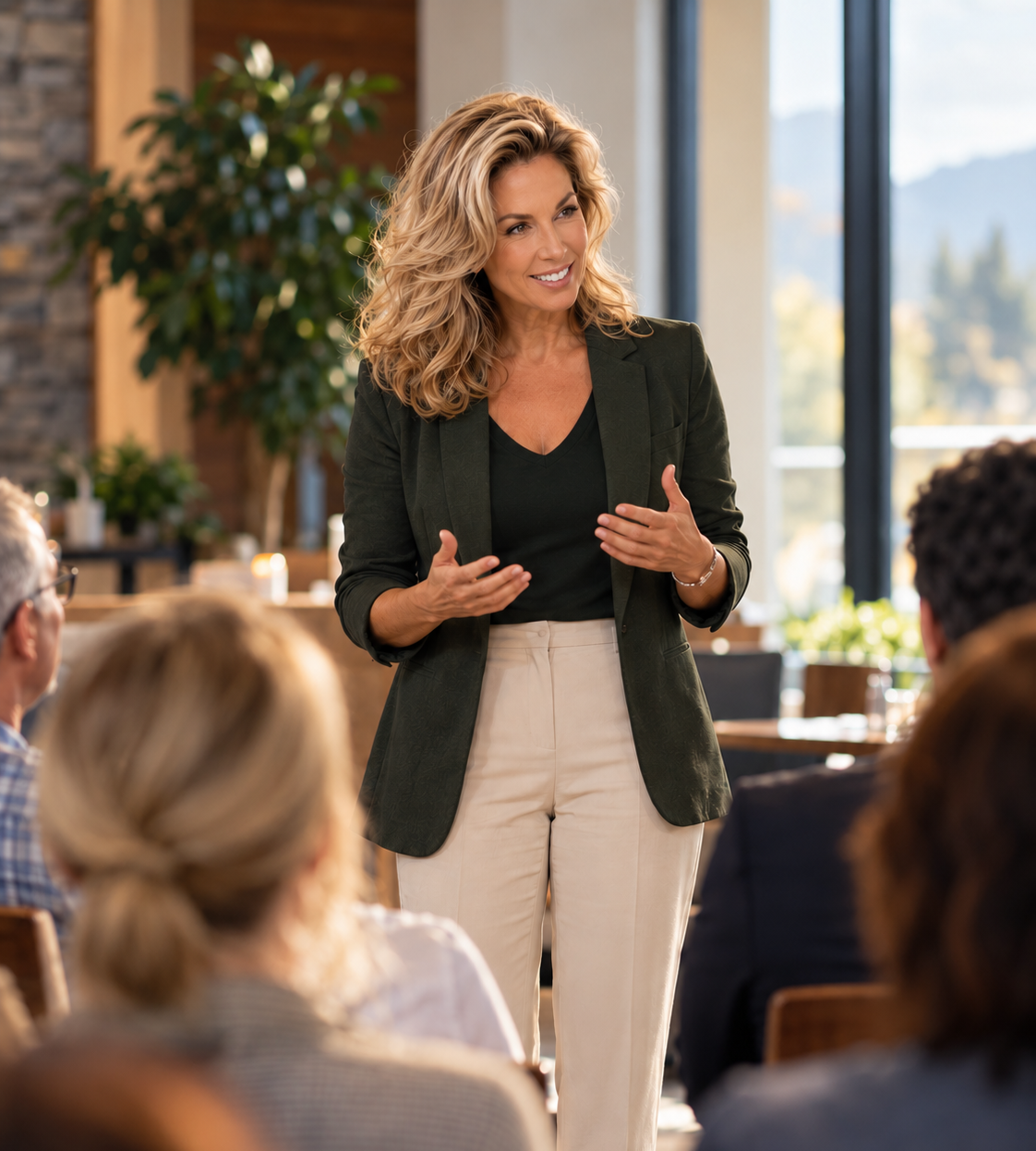
Sometimes a story makes us recognize something we haven’t been able to name. A question follows us home. An idea causes us to look differently at a belief we’ve carried, the way we’ve been moving through our days, or the role we’ve been playing in our own life.
Michelle’s approach to speaking is grounded in that kind of reflection.
She shares from her own experiences—personal and professional—not because her path is a blueprint for someone else’s, but because stories can give us a place to recognize pieces of our own.
The goal isn’t to tell people what they would change.
It’s to create the stirring that begins an inner dialogue—and to leave people with something worth thinking about after they leave the room.
CONVERSATIONS FOR DIFFERENT KINDS OF ROOMS
The questions we carry about identity, wellbeing, work, change, and caregiving don’t belong to only one kind of audience.
Michelle’s speaking experiences can be shaped for different settings while remaining grounded in the same principle: meet people where they are and give them something meaningful to consider in the context of their own lives.
Workplaces & Organizations
For employees, leaders, teams, and organizational communities navigating the realities of work, change, achievement, wellbeing, identity, and the human experiences that don’t disappear when we walk through the workplace door.
Professional Associations &
Conferences
For audiences brought together by a profession, industry, or shared area of work—whether the conversation centers on leadership and change, the human side of implementation, professional identity, wellbeing, or lessons drawn from experience.
Community & Support
Organizations
For nonprofits, caregiver communities, support organizations, churches, neighborhood groups, and other gatherings where people come together around shared experiences, transitions, responsibilities, or questions about living well.
The setting may change. The goal remains the same: create a conversation people can connect to their own lives.
SPEAKING TOPICS
Conversations grounded in experience, reflection, and real life
Michelle’s peaking topics draw from both personal and professional experience, with each conversation shaped by the audience, setting, and purpose of the gathering.

The Stories We Carry
The stories we develop about ourselves can quietly shape how we see who we are, how we show up in our relationships and work, and how we respond to challenge or change.
Drawing on her own experiences with identity, self-doubt, achievement, and learning to question long-held beliefs about herself, Michelle explores what happens when we notice those stories rather than simply accept them as truth.
The conversation invites people to consider:
What stories have I been telling myself—and how are they shaping the way I live today?

Beyond the Person We See
It is easy to form conclusions about other people from what we can see—their confidence, accomplishments, behavior, choices, or the way they show. up in a particular moment. It is just as easy to compare what we know about our own lives with the small part of someone else’s life that is visible to us.
Drawing on experiences that challenged her assumptions about comparison, perception, and how others see us, Michelle explores how incomplete those pictures can be—and what can change when we approach ourselves and one another with greater curiosity.
Sometimes the person who appears confident is still finding their confidence. The person who seems strong may be carrying something no one else can see. And the person we’ve already decided we understand may be very different from the story we’ve created about them.
The conversation invites people to consider:
What might I see differently if I became more curious about the person behind what I can see?

When Achievement Becomes Identity
Achievement can be deeply meaningful. A career can provide purpose, belonging, challenge, relationships, and opportunities to contribute in ways that genuinely matter. But over time, what we do can also become closely intertwined with how we understand who we are.
Drawing from more than three decades in corporate leadership and her own experience of eventually questioning a life that looked successful from the outside, Michelle explores the complicated relationship between achievement, responsibility, identity, and wellbeing. What happens when being capable, dependable, and willing to carry more becomes part of how we define ourselves? And what happens when a role that once gave us purpose begins to feel different—or when circumstances require us to reconsider our relationship with it?
This isn’t a conversation about rejecting ambition or walking away from meaningful work. It’s an invitation to become curious about our relationship with achievement—and whether our identity has room to exist beyond the roles, responsibilities, and accomplishments we’ve accumulated.
The conversation invites people to consider:
Who am I when I am not defined only by what I accomplish, produce, or carry for others?

Leading Through Change When You Don’t Have All the Answers
Leadership often means moving important work forward before every answer is known. The challenge becomes even greater when the work crosses functions, involves unfamiliar subject matter, affects people and systems at the same time, or requires bringing together individuals who see the problem from very different perspectives.
Drawing from more than three decades of professional leadership—including complex operational initiatives, regulatory and training transformation, organizational integration, emergency response, and work in unfamiliar domains—Michelle shares lessons from leading change when expertise alone isn’t enough.
Her experience has taught her that effective leadership doesn’t require pretending to know everything. It requires knowing how to ask the right questions, find and listen to the people who hold critical expertise, translate complexity into something workable, create structure where it is needed, and keep people connected to the purpose behind the work.
This is not a conversation about a perfect change-management formula. It is a conversation grounded in what happens when plans meet people, systems, uncertainty, competing priorities, and the realities of implementation.
The conversation invites people to consider:
How do I lead effectively when my responsibility is greater than what I can possibly know on my own?

Wellness in a Life That Doesn’t Stop
Wellbeing is easy to talk about when we imagine having enough time, energy, and space to focus on it. Real life rarely works that way. Work, relationships, caregiving, responsibilities, unexpected changes, and competing priorities don’t politely disappear while we try to take better care of ourselves.
Drawing from her work in wellness and behavior change as well as her own experience of trying to make meaningful changes within a full and imperfect life, Michelle explores a broader view of wellbeing—one that extends beyond exercise and nutrition and considers the whole person.
Rather than presenting wellness as another standard to achieve, the conversation explores how meaningful change can begin with greater awareness, small intentional choices, and a willingness to learn from what actually works in our own lives. Progress doesn’t require perfect circumstances, and taking care of ourselves doesn’t have to wait until everything else is finally under control.
At its heart is a simple idea: our wellbeing matters even when life is demanding—and perhaps especially then.
The conversation invites people to consider:
What might taking care of myself look like in the life I am actually living?

Caring for Others Without Disappearing Yourself
Caring for someone we love can be one of the most meaningful things we do. It can also quietly reshape our time, energy, priorities, relationships, and sense of responsibility—sometimes before we fully recognize how much of ourselves has moved to the background.
Drawing on her experience caring for and supporting people she loves while continuing to navigate work, responsibilities, and her own life, Michelle explores the often complicated relationship between caregiving and personal wellbeing. The conversation makes room for the love and meaning that can exist alongside exhaustion, frustration, worry, guilt, and the pressure to keep being the strong or dependable one.
Taking care of ourselves while caring for someone else isn’t about caring less. Nor does it require pretending that balance is always possible. It can begin by recognizing that the caregiver remains a person with needs, limits, relationships, hopes, and a life that also deserves care.
This conversation isn’t about prescribing the right way to be a caregiver. It is about creating space to acknowledge the person behind the care—and the importance of allowing support to move in both directions.
The conversation invites people to consider:
How can I keep caring deeply for someone else without completely losing sight of myself?
These topics can stand on their own or provide a starting point for a conversation about what would be most meaningful for a particular audience.
WAYS TO WORK TOGETHER
Different rooms call for different kinds of conversation
A conference audience, a workplace gathering, a community organization, and a small facilitated group may explore similar ideas—but the way people engage with them can differ greatly. Michelle’s speaking engagements can take several forms depending on the audience, setting, and purpose.
Speaking Presentations
Designed for conferences, organizational gatherings, community events, and other settings where the goal is to bring an audience together around a meaningful idea or conversation.
Michelle combines story, perspective, and practical insight to create presentations that engage people in the room and leave them with something to keep considering afterward. Presentation length and focus can be shaped to fit the event's setting and purpose.
Interactive Workshops
For groups that want to move beyond hearing an idea and spend more time exploring how it connects to their own experiences.
Workshops create additional space for reflection, discussion, and thoughtfully designed activities that help participants engage more deeply with the subject. The emphasis is not on arriving at one prescribed answer, but on giving people an opportunity to examine what the conversation means in the context of their own lives or work.
Facilitated Conversations & Small Group Sessions
Some conversations benefit from a smaller room and a different kind of engagement.
Michelle facilitates guided conversations that create space for participants to reflect, share perspectives, ask questions, and learn from one another. These sessions may work particularly well for community groups, caregiver organizations, employee groups, leadership gatherings, or other settings where dialogue is as important as presentation.
Michelle is also available for select panels, moderated discussions, and conference conversations when her experience and perspective align with the subject.
Not sure which format fits? The speaking inquiry doesn’t require you to have everything figured out. Tell Michelle about your audience, your setting, and what you hope the experience will create.
The right format can be part of the conversation.
EXPERIENCE BEHIND THE CONVERSATION
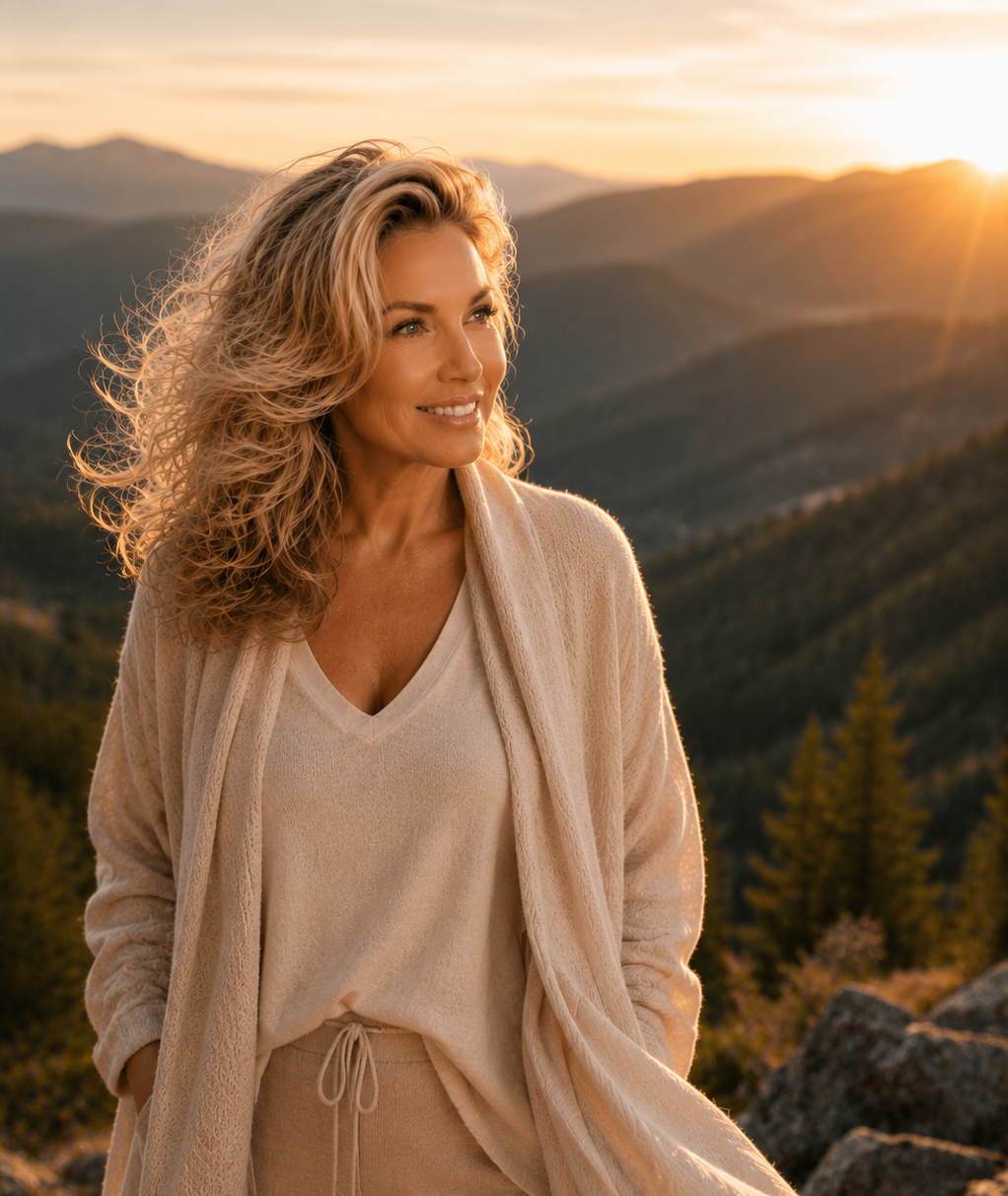
Michelle Farkas draws from more than three decades of professional leadership, her expertise in wellness and behavior change, and lived experience to bring depth and perspective to the conversations she leads.
For more than three decades, Michelle worked in a complex corporate environment where leadership often mean navigating change, bringing people and systems together, solving unfamiliar problems, and moving important work forward when the path wasn’t always obvious. Her experience has included training and regulatory transformation, organizational integration, emergency response, operational initiatives, and leading work across areas where she wasn’t always the subject-matter expert—but was responsible for helping people find a way forward.
Her professional experience also brought her to the stage. Michelle has spoken at industry conferences and within corporate settings, including repeat invitations to the World Aviation Training Symposium to share lessons from work she helped lead and implement.
Today, Michelle is a Certified Wellness Coach, Certified Nutrition Coach, Behavior Change Specialist, Weight Loss Specialist, and Stretching & Flexibility Coach through the National Academy of Sports Medicine. Her work in wellness and behavior change has deepened a perspective already shaped by decades of leadership: meaningful change rarely happens in isolation from the realities of people’s lives.
But Michelle doesn’t speak only from credentials or professional accomplishments.
She also speaks from experience—of achievement and uncertainty, confidence and self-doubt, caring for others, questioning long-held stories about herself, navigating major transitions, and learning that growth is rarely as linear as we imagine.
That combination allows Michelle to enter very different rooms without pretending that one story, one framework, or one answer applies to everyone.
She brings what she knows, what she has lived, and the questions worth exploring—and invites people to consider what any of it might mean in their own lives.
WHAT HAPPENS NEXT
Every speaking engagement begins with a conversation about the people in the room
If you’re considering Michelle for an upcoming event, gathering, or organization, the first step is a brief speaking inquiry. You don’t need to know the exact topic, format, or presentation length before reaching out.
Tell Michelle a little about your organization or group, the audience you’re bringing together, the event's purpose, and what you hope people will take away from the experience.
Michelle will review the inquiry to determine whether her experience and speaking approach fit what you’re trying to create. If they are, the next step is a conversation to learn more about the opportunity and explore the topic, format, timing, and other details together.
From there, Michelle will develop an appropriate scope for the engagement, including the agreed-upon experience, logistics, and investment.
The right speaking experience can do more than fill a place on an agenda.
It can introduce an idea, create a moment of recognition, or begin a conversation that continues long after the event is over.
If you’re looking for a speaker who brings professional experience, lived perspective, and a thoughtful approach to conversations about work, wellbeing, identity, change, leadership, caregiving, and the stories we carry, Michelle would welcome the opportunity to learn more about your audience.