
TRAIL NOTES
The Experiences That Shape How I Walk Alongside Others
For much of my life, I thought about change in very different settings—in a complex organization, alongside people navigating their own challenges, and eventually in the changing landscape of my own life.
Over time, those experiences began to connect.
My professional career taught me that knowing what to do and making change work in the real world are very different things. My own experiences taught me to question some of the stories I had been telling myself about who I was and what I could do, to recognize progress that didn’t always look the way I expected, and to understand that there isn’t one right way to navigate a mountain.
Later, my education in wellness and behavior change gave me new ways to understand lessons I had been gathering for years.
Mountain Awakening grew from the place where those experiences began to converge.
Retirement Was Only the Beginning
I spent 31 years with Delta Air Lines, working across learning and development, leadership, project management, and complex operational and organizational initiatives. My roles changed over the years, as did the challenges in front of me, but much of my work shared a common thread: helping turn complicated ideas, requirements, and goals into something people could actually understand, use, and carry forward.
That work taught me to value expertise and good planning. It also taught me their limits.
Again and again, I saw that successful change was rarely about information alone. You could have a sound strategy, a carefully designed process, clear expectations, and knowledgeable people—and still discover that making something work in the real world was far more complicated.
People brought different experiences, pressures, questions, strengths, and perspectives with them. Circumstances changed. Plans needed adjustment. Sometimes the most important thing I could do was listen long enough to understand what I didn’t yet know.
Over time, I learned that bringing expertise to a situation didn’t make me the expert on someone else’s experience.
That lesson has stayed with me.
And Then Came The Question I Hadn’t Planned For
When I retired from Delta after 31 years, I was elated. For the first time in decades, there was no work phone demanding my attention. I wasn’t checking email at all hours. My calendar wasn’t built around meetings, deadlines, and whatever needed to be solved next. For about two weeks, it felt like nirvana.
And then I remember thinking: Now what?
The logical answer seemed to be consulting. I knew the work. I had decades of experience. I began exploring how I might take what I had done at Delta and simply do it somewhere else. But something about that answer didn’t feel quite right.
Years earlier, I had been sitting at a flight attendant graduation listening to one of our vice presidents talk about how he still woke up excited to come to work every morning. I remember thinking, I wonder what that feels like. I hadn’t stopped caring about my work. I was dedicated to it and committed to doing it well. But somewhere along the way, I had realized there was a difference between being deeply committed to something and being genuinely energized by it.
I wanted to discover what might get me out of bed in the morning—and occasionally keep me awake at night—for the right reasons.
Then Delta called.
As the airline worked to restore operations during the COVID-19 pandemic, I returned as a consultant. In many ways, I was back in familiar territory: meaningful work, complicated problems, and people I respected. I had gotten back on the hamster wheel. It was the same thing, just slightly different.
And somewhere during that time, another question began to emerge. Instead of asking only what I already knew how to do, I was beginning to wonder what else might be possible.
When the Mountain Challenged the Story
During that period of questioning, I became involved with 29029, an endurance event built around the challenge of repeatedly climbing a mountain, with the full event designed to reach the equivalent elevation of Mount Everest in 36 hours.
I signed up carrying plenty of reasons why someone like me probably couldn’t do something like that.
As I trained and climbed, I began to recognize how often I treated those assumptions as facts. There’s no way I can do this. I’m not capable of that. That’s for someone else.
I began to understand something that would stay with me long after I left the mountain: I was the stories I was telling myself.
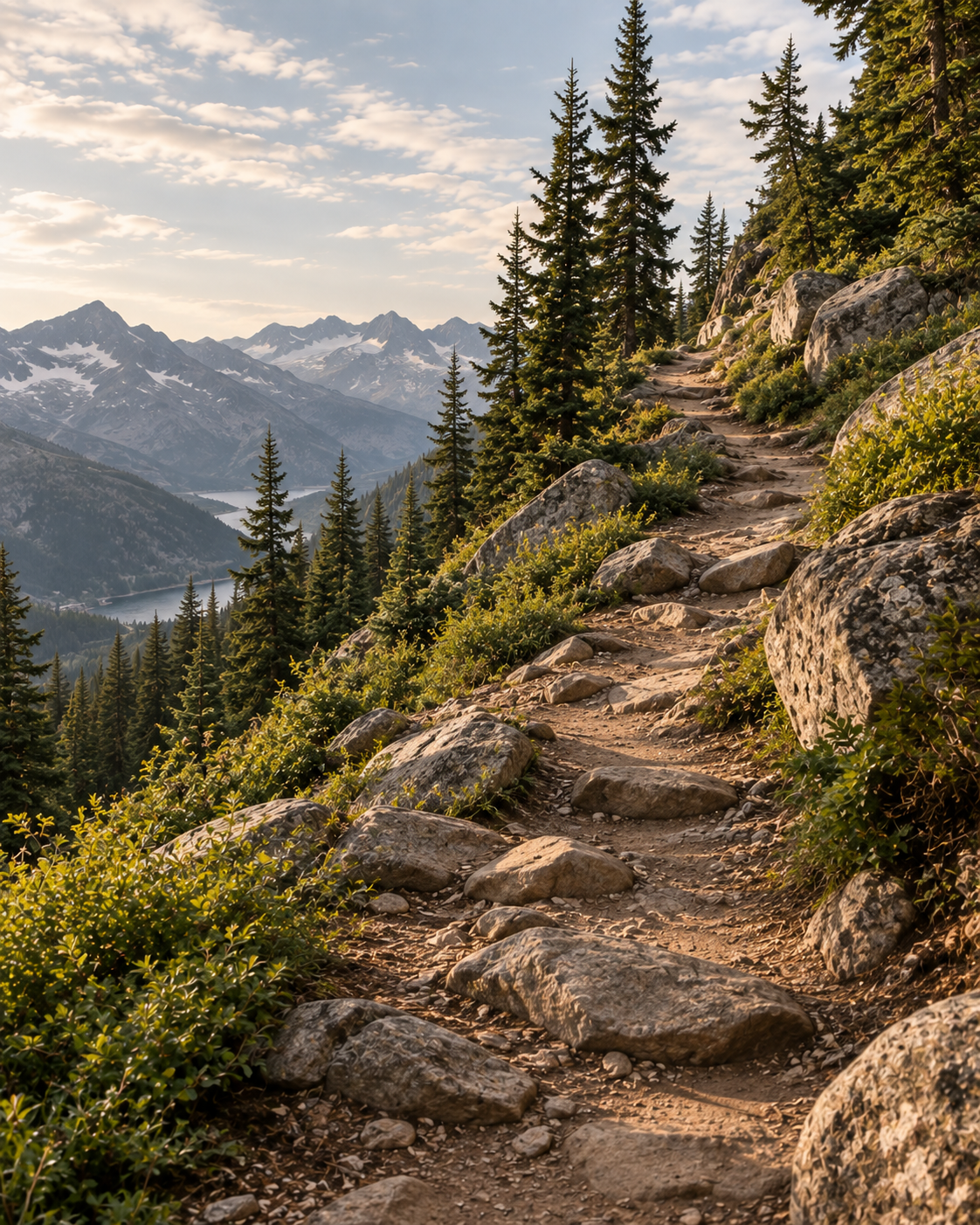
At Snowbasin, completing the full event meant climbing thirteen ascents. I completed seven in 25 hours.
For a while, it would have been easy to let the ascents I didn’t complete define the experience—to focus on what I hadn’t done instead of what I had.
Seven times, I climbed that mountain.
And seven times was something worth being proud of.
That experience began changing the way I thought about success. Progress wasn’t as black-and-white as I had sometimes made it. An intended endpoint mattered, but not reaching it didn’t automatically erase everything that had happened along the way.
I saw that in other people’s stories, too. Throughout 29029, I met people carrying their own doubts, histories, expectations, and definitions of what the mountain meant. Someone might complete every ascent. Someone else might climb three—and those three could represent an extraordinary accomplishment.
The mountain couldn’t tell you what counted. The number couldn’t tell you what counted. You had to understand the person climbing it.
Over time, that lesson grew far beyond 29029. I began to see the mountain differently—not simply as something to conquer, but as a place where we encounter ourselves.
Sometimes we climb. Sometimes we stop. Conditions change, and sometimes the route needs to change with them. The evidence of progress isn’t always found at the Summit.
I hadn’t figured out the mountain.
I was beginning to understand that everyone was climbing a different one.
When Different Paths Began to Converge
As I continued asking what might come next, I found myself increasingly drawn to wellness—not simply as something to achieve, but as something connected to how we live, the choices we make, the circumstances we’re navigating, and what matters to us.
I began studying wellness, nutrition, and behavior change more formally. That education gave me new knowledge, new tools, and new ways of understanding questions I had encountered throughout my career and in my own life.
Gradually, things that had once seemed unrelated began to connect.
Decades of working with people had taught me that information alone rarely creates meaningful change. My own transition had taught me what it felt like to have experience, capability, and plenty of logical options—and still not know exactly what should come next.
The mountain had challenged some of the stories I told myself about what I could do. Just as importantly, the people I met along the way reminded me that no two people’s circumstances, challenges, or measures of progress were exactly the same. My education in wellness and behavior change helped me better understand why meaningful, sustainable change is rarely as simple as knowing what we “should” do.
Those weren’t separate chapters I needed to leave behind. They were beginning to converge, and that convergence became Mountain Awakening.
I created Mountain Awakening because I had come to believe that wellbeing isn’t something another person gets to define for us. Neither is the Summit. Our starting points are different. Our circumstances are different. Conditions change. What matters to us can change. And meaningful progress doesn’t always follow the route we expected when we began.
I had also encountered so many people who seemed to question whether wellness, success, or even the opportunity to make themselves a priority somehow belonged to other people more than it belonged to them. I wanted to create a different kind of space: one where you don’t have to arrive with everything figured out, where your life isn’t treated like a problem someone else needs to solve, where progress can be noticed before the Summit, and where having knowledge and experience doesn’t require pretending to know someone else’s mountain better than they do.
That understanding is at the heart of Mountain Awakening.
Walking Alongside, Not Ahead
Today, I bring more than three decades of professional experience, lived experience, and formal education in business, wellness, nutrition, and behavior change to Mountain Awakening.
Each has shaped the way I work.
I believe people are capable of meaningful change. I also know that change doesn’t happen in a vacuum. We have responsibilities, relationships, histories, competing priorities, unexpected circumstances, and days when the route that looked perfectly reasonable on paper simply doesn’t work.
That’s why I don’t believe my role is to stand ahead of you and tell you which way to go.
I walk alongside you.
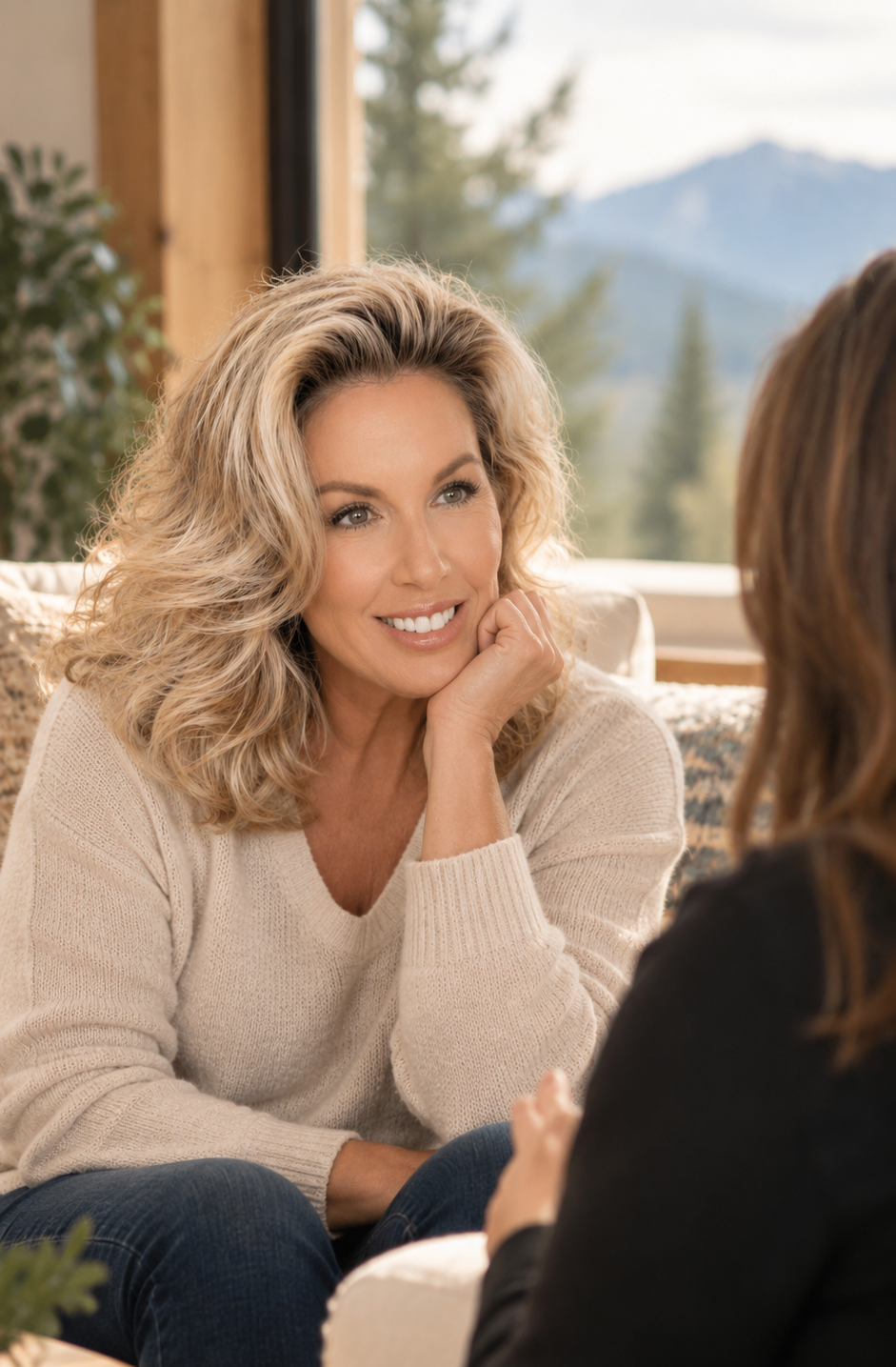
I bring curiosity, thoughtful questions, structure, relevant knowledge, and a willingness to notice with you what is working, what isn’t, and what you may be learning along the way. You bring something I never can: the experience of being you. Your priorities. Your circumstances. Your values. Your decisions. Your mountain.
My professional experience and education support my work. That foundation includes undergraduate and graduate education in business, along with formal study and certifications in wellness coaching, nutrition coaching, behavior change, weight loss, and stretching and flexibility. I keep studying because I believe the people who trust me with their stories deserve someone who takes that responsibility seriously.
But credentials aren’t what define the partnership. The partnership begins with listening.
What I Carry Forward
When I look back, I no longer see a corporate career, a personal transition, the mountain, and formal education as unrelated chapters. I see a body of experience that continues to shape how I listen, the questions I ask, and the way I walk alongside others.
Together, those experiences did not give me a formula for how change should happen. They taught me why there cannot be only one.
That understanding became Mountain Awakening, and it continues to shape the work I do today.
To me, walking alongside someone means bringing the full weight of what I know while remaining curious about what I don’t. It means listening long enough to understand the person, their circumstances, what matters to them, and what progress might look like in the life they are actually living.
I did not reach the Summit I set out to reach at Snowbasin. But I did not come down the mountain as the same person who had begun climbing it. The experience changed what I understood about myself, about progress, and about how much a number can—and cannot—tell us about someone’s journey.
A Summit can show us what we have accomplished. The way down begins to reveal what we have learned, what we will carry home, and who we have become along the way.
That may be the part of the mountain that matters most long after the climb is over.