
TRAIL NOTES
Feeling Less Sure Does Not Mean You Are Less Strong
The Part of the Mountain I Didn't Train For
When I was training for 29029 while living in Atlanta, I spent a lot of time hiking at Kennesaw Mountain. The event itself has a fairly simple rhythm: hike up the mountain, take the gondola down, and do it again. Depending on the mountain, you repeat that process enough times to accumulate the vertical equivalent of climbing Mount Everest.
Training for it when you don't live near a mountain with an operating gondola is a little different. If you hike up a mountain, eventually you also have to hike back down.
I hated the hiking-down part.
It always struck me as strange because I could feel strong on the ascent. Climbing was certainly difficult, but I understood how to do difficult. I could settle into the work, keep putting one foot in front of the other, and continue moving uphill.
Descending felt entirely different. I didn't feel as strong. I was much more conscious of my footing, and there were times when I worried that I might slip or fall. I had climbed the mountain under my own power, yet somehow coming back down could make me feel less capable.
There is a physical explanation for some of that, of course. Ascending and descending place different demands on the body and use our muscles differently. But lately I have been thinking about what that experience taught me beyond hiking.
We Learn How to Climb
We spend much of our lives learning how to climb.
For many of us, that begins fairly early. We are encouraged to work hard, set goals, get an education, build a career, take on greater responsibility, and continue progressing. We learn that effort can lead to accomplishment, accomplishment can lead to recognition, and recognition feels good. There is nothing inherently wrong with that. Achievement matters. I believe there is real value in setting a meaningful goal, working hard toward it, and taking pride in reaching it.
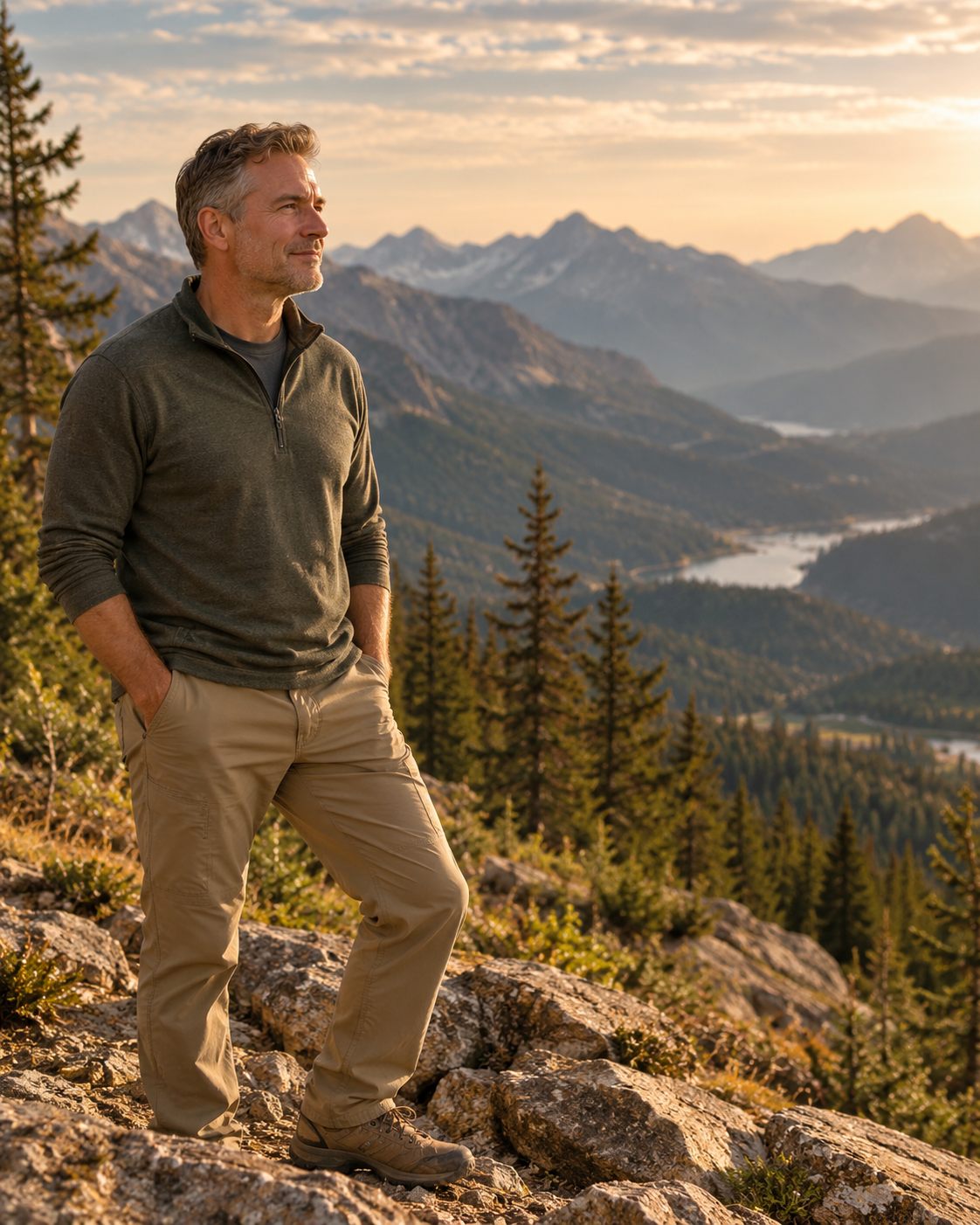
I spent 31 years at Delta Air Lines, and there was a lot of climbing during those years. I took on increasingly complex work, learned to navigate difficult situations, led people and projects, solved problems, and built a career I remain proud of.
What I understand differently now is how easily achievement can also become one of the ways we validate ourselves.
Some of that validation comes from other people. Human beings like recognition. We like knowing that our contribution mattered and that someone noticed. But I don't think my experience was simply about needing validation from Delta or from the people around me. I was also validating myself through Delta. I could look at what I had accomplished and use it as evidence of who I was.
The distinction is subtle, but I think it matters. Over time, the distance between what I accomplish and who I am can become surprisingly narrow.
When the Terrain Changes
When I retired after 31 years, I was elated. For about two weeks, it felt like nirvana. Then came the question I wrote about in an earlier Trail Note: Now what?
At first, consulting seemed like the obvious answer. I had decades of experience, so why wouldn't I take what I knew how to do and do it somewhere else? Eventually Delta asked me to return as a consultant during COVID, and I did. I knew that terrain. I knew how to operate there, and I knew how to be capable there.
Over time, though, I realized that being capable of continuing to do something wasn't the same as wanting to continue doing it.
Looking back now, I can see that I had reached a Summit and begun a Descent without understanding how different the terrain might feel. The visibility wasn't particularly good either.
A Descent can be foggy. We can move without being able to see far ahead, and we may not yet understand where the trail is taking us or have enough distance to look back clearly at where we have been. The landmarks that once helped orient us may no longer be visible.
That was true for me after Delta. I was moving forward, but I didn't yet have enough perspective to understand what I was leaving behind, what I was carrying with me, or what parts of my identity had become intertwined with the mountain I had just climbed.
I also think I was doing something very human: reaching for muscles I already knew how to use. Working hard, solving problems, taking responsibility, and figuring out what came next had served me extraordinarily well. Those capabilities were part of how I climbed.
But just as I learned at Kennesaw Mountain, descending asks something different of us.
When Capable People Feel Less Capable
That realization has changed the way I think about change itself.
When we enter unfamiliar terrain, we can suddenly feel less capable even though the strengths and experiences that brought us there haven't disappeared. We may have spent years knowing what good performance looks like, understanding the rules, recognizing the landmarks, and accumulating evidence that we know how to navigate.
Then a career ends. Children leave home. A relationship changes. A caregiving role shifts. We move somewhere new. Our health changes. Or we begin something we have never done before.
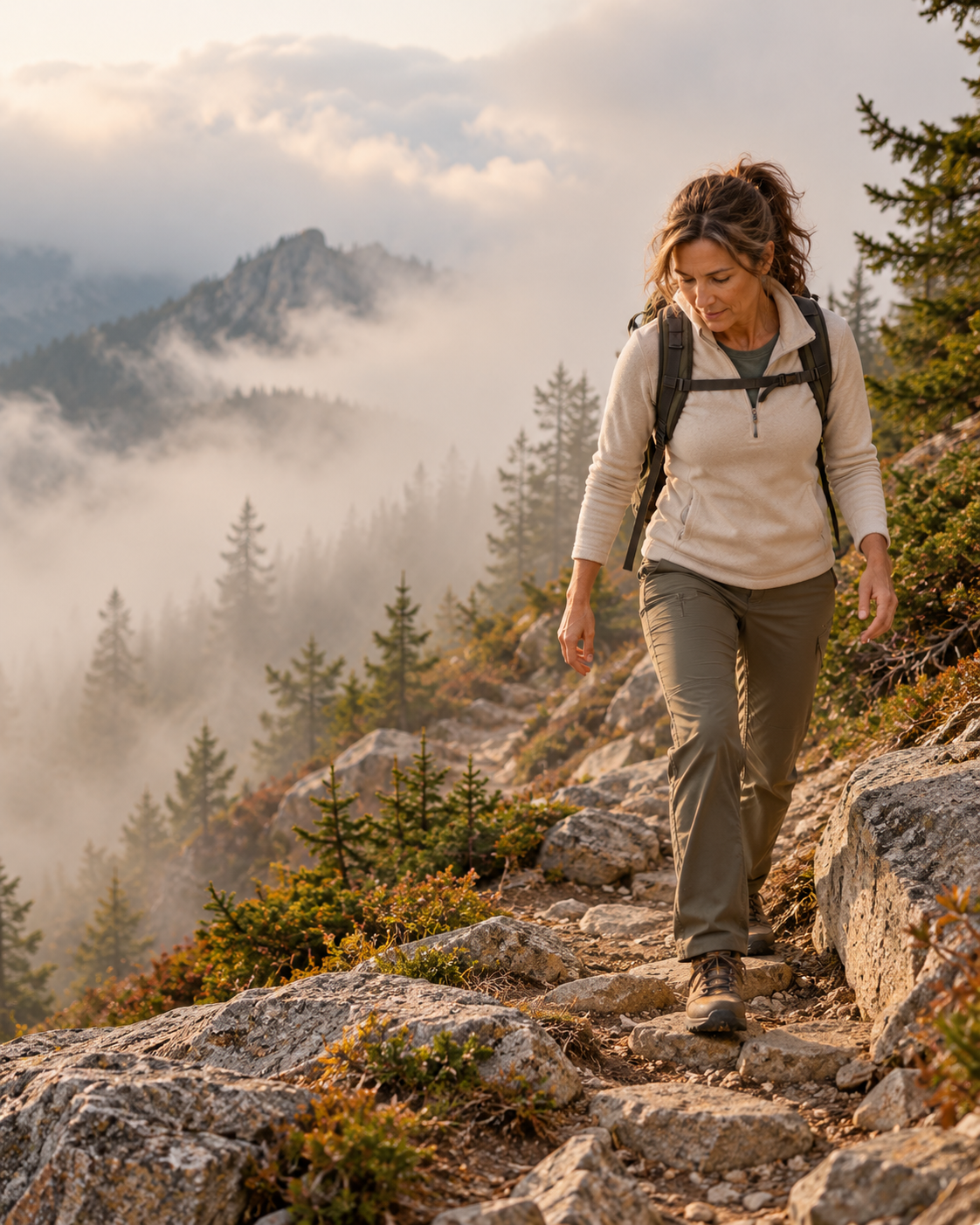
The terrain changes, and suddenly we are paying much more attention to our footing.
That uncertainty can be easy to misinterpret. If I don't feel as capable here, perhaps I am not as capable as I thought I was.
But those are two very different things.
Feeling less sure of yourself in unfamiliar terrain does not erase the strength that got you there.
Sometimes the terrain is simply asking us to use that strength differently and perhaps to develop capacities we haven't needed in quite the same way before.
I think that may be one reason change can be particularly difficult for capable people. Familiar terrain gives us familiar evidence of competence. We understand how things work, what is expected of us, and how to recognize when we are doing well. When those familiar reference points disappear, it can temporarily become harder to recognize our own capability.
The absence of familiar evidence, however, is not evidence of its absence.
Looking Back From Farther Down the Mountain
I can see that more clearly now because I recently had an unexpected opportunity to revisit the work I had done during my Delta career.
For several years after retiring, I didn't spend much time looking back. The way that chapter ended left me ready to put some distance between myself and that part of my life, and in doing so, I also put distance between myself and many of the things I had accomplished there.
When I recently had reason to revisit the breadth of what I had actually done during those 31 years, my reaction surprised me: Wow. I did all of that.
With distance, I could look back at the same mountain differently. I didn't need to return to that version of my life, nor did I need to change how I felt about every part of the experience. I could simply recognize what had been accomplished and see it from a perspective I didn't have when I first began the Descent.
More importantly, I could distinguish more clearly between what belonged to Delta and what belonged to me.
The tangible business outcomes belonged to Delta. The programs, projects, and organizational results became part of the company I had worked for. But the experience was mine. The pride was mine. The gifts God gave me were mine. And the knowledge that I had brought those gifts to my work and done my very best was mine.
I hadn't left those things at the Summit. I had carried them down with me.
Why the Framework Doesn't End at the Summit
That distinction gets to the heart of why the Mountain Awakening Framework does not end at the Summit.
Reaching something meaningful matters, and there is value in recognizing what it took to get there. But eventually, what we experience on the climb has to become something we can carry forward. Within the Mountain Awakening Framework, that is the work of the Descent: creating space for reflection and perspective so that experience can begin becoming integration and, over time, wisdom.
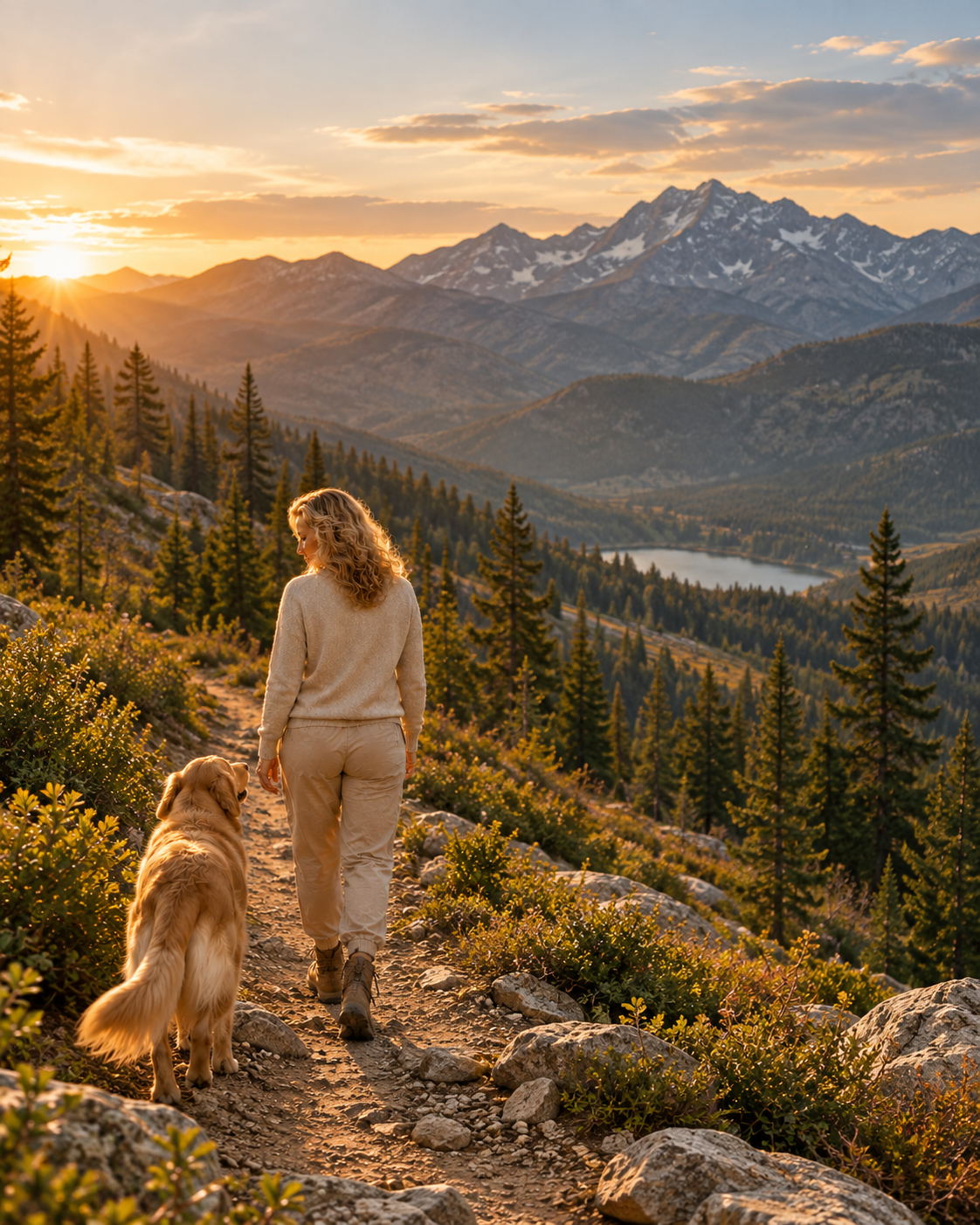
I have come to believe that part of that integration is learning to distinguish between what belonged to a particular Summit and what became part of us along the way. We don't have to diminish an accomplishment to move beyond it, nor do we have to keep achieving in the same way to retain what the experience gave us.
That understanding doesn't always arrive immediately. Some descents come when the trail is clear and perspective comes relatively easily; others come when we spend part of the journey moving through a cloud layer, able to see only enough of the trail to take the next few steps. Along the way, we may also discover that the muscles we developed for the climb are not the only ones we will need for the way down.
That is one reason I think the Descent matters. It acknowledges something that can be easy to miss in a culture that spends so much time teaching us how to reach the next Summit: what happens after an accomplishment is part of the journey, too.
Learning to Use Strength Differently
I still don't particularly enjoy hiking downhill, but I understand that feeling less strong on a descent never meant the strength I had on the climb disappeared. I was asking my body to navigate the mountain differently.
I think change can ask the same thing of us.
Sometimes strength looks like effort, persistence, and continuing to push toward something we can see. At other times, it may look more like slowing down enough to find our footing, tolerating uncertainty, reflecting on where we have been and trusting ourselves enough to continue when we cannot see the entire trail ahead.
In an earlier Trail Note, I wrote that a Summit can show us what we have accomplished, while the way down begins to reveal what we have learned, what we will carry home and whom we have become along the way.
I understand even more clearly now why the way down matters.
The Descent gives us an opportunity not simply to remember that we reached a Summit, but to discover what we can carry forward. As the terrain changes, we begin gathering a different kind of evidence about ourselves—not only that we know how to climb, but that we can learn how to navigate when the trail, the conditions, and even the muscles required of us are different.
The terrain will change again. It always does.
Perhaps part of what we carry home is a growing trust that when it does, we can learn how to navigate changing terrain.